How do you find subway stations with working elevators in Seoul?
Seoul Subway stations are largely built to accommodate wheeled movement, but you should verify elevator locations and operation through official transit channels before entering the underground concourses.

The public transport network in Seoul (서울) uses an integrated system of elevators, barrier-free entry gates, and tactile paving designed for independent travel. Most stations allow travellers using manual chairs, motorized mobility devices, or multi-generational family strollers to move from street level down to the platform without climbing steps. You will notice designated boarding areas along platform screen doors that align more closely with train car floors, making boarding simpler.
Because station layouts can be expansive with multiple exits scattered across city blocks, elevator access does not exist at every single stairwell entrance. An intersection might have eight surface exits, but only one or two street-level glass elevator shafts. The official Visit Korea travel guide confirms that barrier-free resources, real-time elevator operational status, and station transfer details are maintained through the Seoul Danurim Accessible Tourism Center portal at seouldanurim.net. Checking that portal or local transit applications prior to your journey saves you from rolling toward an exit that only offers a staircase.
For complex underground transfers between crossing lines, stations provide posted wheelchair wayfinding overhead and on tiled walls. These routes direct you to internal platform elevators rather than the escalators. If an elevator is undergoing scheduled maintenance, station staff can assist, though planning a transfer at larger interchange hubs requires building extra transit time into your afternoon.
Are major historic sites like Deoksugung Palace wheelchair friendly?
Deoksugung Palace is one of the most accessible royal complexes in Seoul, featuring step-free entry routes, accessible restrooms, and elevator access to its historic Western-style structures.
Centrally positioned beside City Hall Station (시청역), which serves Line 1 and Line 2, Deoksugung Palace (덕수궁) blends traditional Joseon Dynasty architecture with early twentieth-century stone halls. As documented in the Visit Korea accessibility resources, the palace grounds have been systematically upgraded for barrier-free tourism. Gentle wheelchair ramps bypass traditional stone thresholds, and accessible elevators serve the modern, Western-style museum facilities on the property.
The ground surface across the interior courtyards consists primarily of compacted dirt, wide paving, and firm pathways rather than loose, deep gravel that traps small front casters. This level surface allows family members using wheelchairs, canes, or strollers to move comfortably between pavilions without unexpected drop-offs. Accessible public restrooms are clearly marked and located near the entrance grounds.
Immediately outside the main palace gate lies the Deoksugung Stonewall Walkway. This tree-shaded street follows the palace perimeter wall and features a continuous, fully pedestrianized, level surface. It is widely considered one of the easiest historic walks in central Seoul, allowing slow strolls away from heavy vehicular traffic. The walkway connects smoothly back toward City Hall Plaza, where low street curbs make crossing straightforward.
Where can you find level outdoor paths along the Han River?
Hangang Park offers miles of continuous, level, paved corridors that run unobstructed alongside the river, making it the premier outdoor flat-ground destination in Seoul.
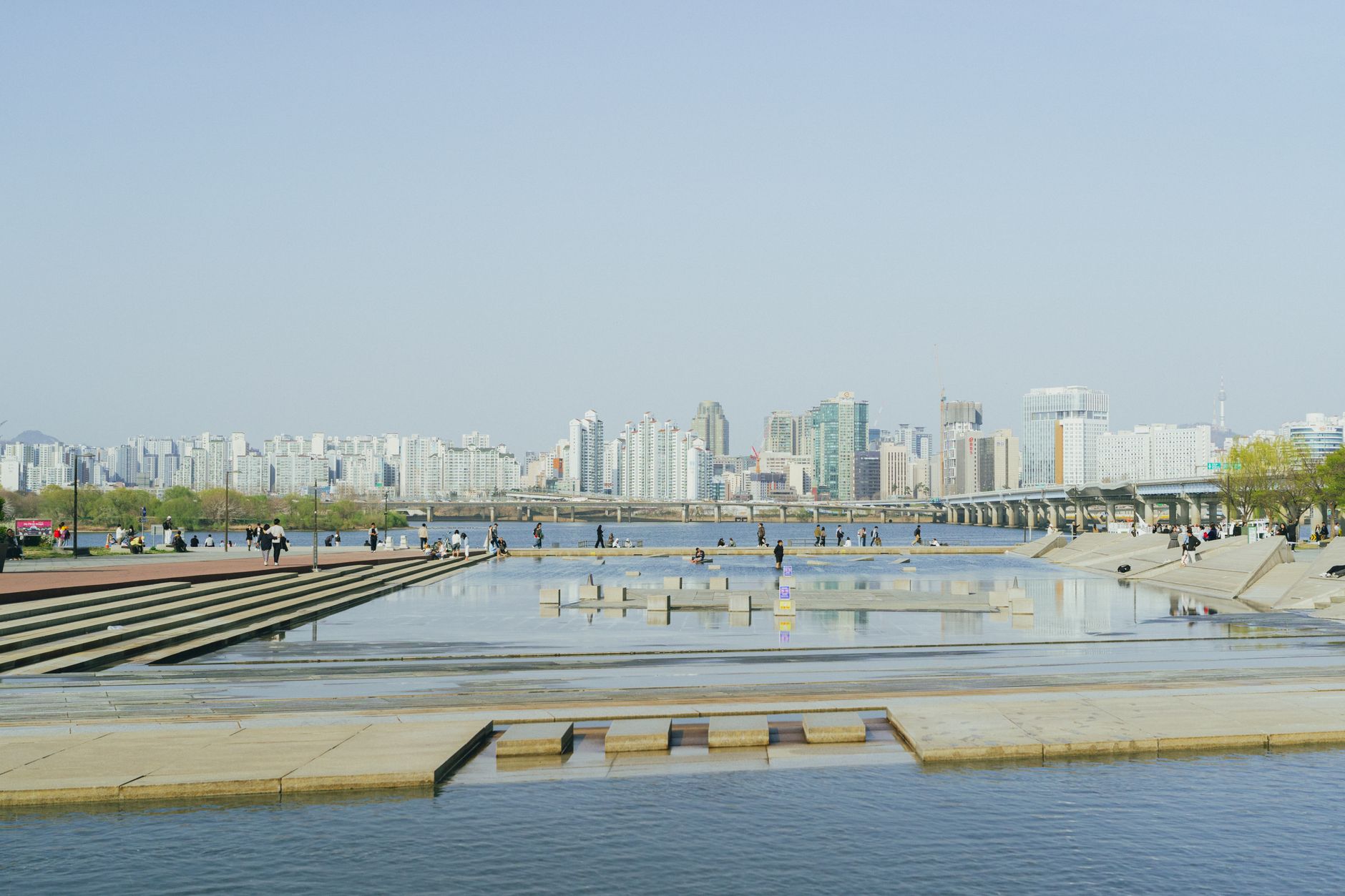
Finding completely flat terrain can be a challenge in a city surrounded by granite mountains, but the Hangang Park (한강공원) network provides uninterrupted, wide multi-use pathways alongside the water. According to Visit Korea regional guides, the riverside parks are equipped with flat paved walking paths, designated rest zones, and open recreational areas free of steep inclines.
These waterfront paths are shared respectfully among pedestrians, runners, and casual cyclists. Distinct painted lanes keep bicycle commuters separated from walkers, which offers a relaxed environment for visitors who need a steady pace. Along the river banks, open lawns and shaded rest benches give multi-generational groups quiet places to pause and watch ferry traffic glide past.
Getting down to the riverbank requires paying attention to approach routes. Access points from nearby subway stations often connect to the parks via enclosed underground pedestrian tunnels or overhead elevator towers installed on bridge approaches. Using elevators built into bridge crossings allows you to bypass the long flight of outdoor concrete stairs that originally served the riverbanks. Once you reach the water level, the terrain remains flat for kilometers in either direction.
When organizing longer stays across Seoul, picking comfortable bases in central, well-connected areas minimizes daily transit friction. If you plan to extend your journey to regional hubs like Sokcho, Jeonju, or Pyeongchang, reserving accessible high-speed rail connections and verifying local ground transit through regional tourism desks ensures a smooth transition beyond the capital.
Frequently asked questions
How do you check if a subway elevator is working before you travel?
You can check real-time elevator operations, barrier-free routes, and station transfer layouts through the official Seoul Danurim Accessible Tourism Center online portal at seouldanurim.net. Looking up your departure and arrival stations before leaving avoids unexpected stair-only exits or maintenance closures.
What transit challenges face multi-generational families in older Seoul neighbourhoods?
While major transport hubs and central sights are step-free, older neighbourhoods often feature steep topography, narrow alleyways, and irregular street curbs without ramps. Multi-generational groups with strollers or wheelchairs should plan street routes in advance rather than cutting through hilly historic residential lanes.
Does Deoksugung Palace require lifting wheelchairs over raised wooden gates?
No, Deoksugung Palace does not require lifting mobility equipment over thresholds. The complex is outfitted with dedicated barrier-free ramps around traditional entrances, accessible restrooms on site, and elevator access inside its Western-style historical buildings.
Can visitors reserve specialized accessible vehicles in Seoul?
Yes, visitors with mobility limitations can arrange specialized accessible vehicle transport through the Seoul Danurim Accessible Tourism Center. The center coordinates dedicated barrier-free tourism resources, accessible itinerary advice, and specialized vehicle reservations across the city.
Updated 10 November 2026
Sources
- Visit Korea travel guide: Official travel guides from Visit Korea (checked November 2026) show that Seoul provides dedicated barrier-free resources through the Seoul Danurim Accessible Tourism Center (`seouldanurim.net`), which coordinates accessibility details, barrier-free routes, and specialized vehicle reservations for travellers with mobility impairments Real-time elevator access, station layouts, and transfer points can be confirmed via the official Danurim portal and transit apps before travelling **Historic Sites (Deoksugung Palace):** Deoksugung Palace (near City Hall Station, Lines 1 & 2) is explicitly equipped for barrier-free tourism, featuring accessible wheelchair ramps, barrier-free elevators to Western-style facilities, and accessible restrooms The adjacent Deoksugung Stonewall Walkway is continuous and pedestrianized, making it practical for manual or electric wheelchairs and strollers **Hangang River Paths:** Seoul's riverside parks (Hangang Park system) provide continuous, paved multi-use pathways, designated rest zones, and flat terrain, creating some of the city's most level recreational corridors **Multi-Generational Travel Considerations:** While flagship destinations and major subways cater well to wheelchairs and strollers, steep topography, occasional street-level curb variations in older neighborhoods, and finding barrier-free family amenities require advance route planning using Danurim-certified itineraries
- Visit Korea accessibility resources: **Subway Stations & Elevators:** Seoul Subway features elevators, barrier-free gates, and tactile paving across its network **Multi-Generational Travel Considerations:** While flagship destinations and major subways cater well to wheelchairs and strollers, steep topography, occasional street-level curb variations in older neighborhoods, and finding barrier-free family amenities require advance route planning using Danurim-certified itineraries
- Visit Korea regional guides: **Hangang River Paths:** Seoul's riverside parks (Hangang Park system) provide continuous, paved multi-use pathways, designated rest zones, and flat terrain, creating some of the city's most level recreational corridors